
“How can you guarantee the quality of your products if you don’t manufacture them yourselves?”
It is a question customers sometimes ask us, and understandably so.
Manufacturing products in-house can appear to offer greater control. In electronics manufacturing, however, product quality depends on much more than who owns the factory. The production equipment, level of automation, inspection methods, manufacturing expertise and quality controls all have an important part to play.
EKE-Electronics works with specialist electronics manufacturers that provide the production capabilities needed for our products. We define our requirements and remain responsible for the quality of the products supplied to our customers.
The important question is therefore how quality is controlled throughout production.
Specialist manufacturing brings specialist capabilities
Electronics manufacturing requires increasingly sophisticated equipment, automation and expertise.
By working with specialist electronics manufacturers, EKE-Electronics has access to advanced production technologies without having to recreate an entire high-volume electronics manufacturing environment internally.
A specialist manufacturer can make substantial investments in highly automated production and inspection equipment because the same manufacturing infrastructure supports production for multiple customers. This gives EKE-Electronics access to advanced manufacturing capabilities that would be difficult to justify based on our production volumes alone.
Automation helps deliver consistent quality
In electronics manufacturing, repeatability is critical.
Automated production processes help ensure that the same manufacturing steps are performed consistently from one product to the next. They can also be combined with sophisticated inspection technologies designed to identify potential manufacturing defects.
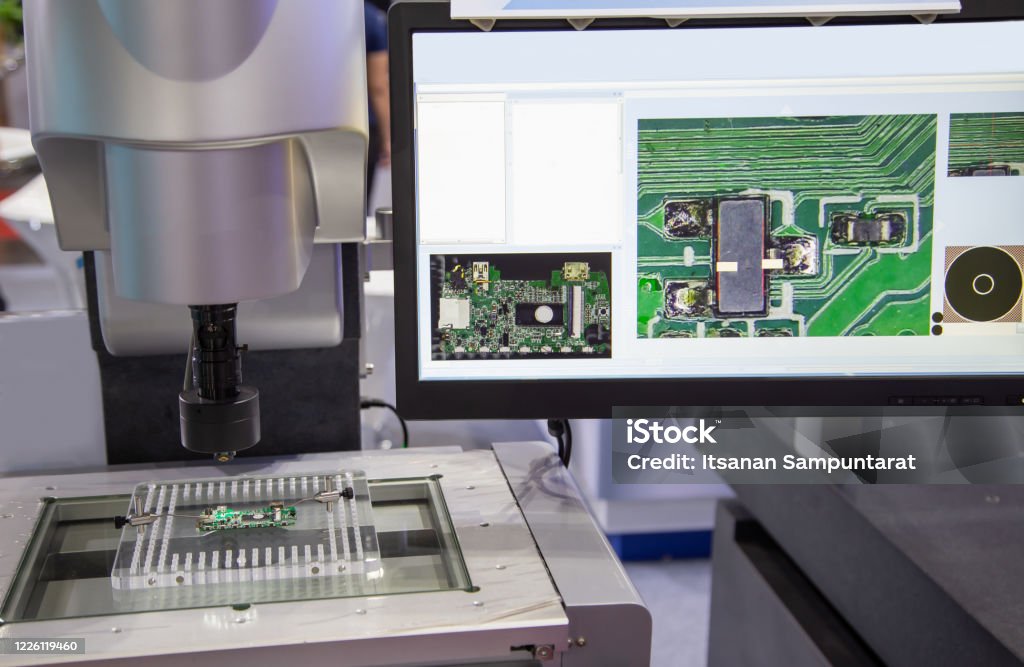
These capabilities include electrical and visual inspection, machine-vision systems and X-ray inspection. X-ray inspection is particularly valuable because it can identify soldering defects beneath components that cannot be detected through external visual inspection alone.
Bringing production in-house does not automatically mean having greater quality control. The more important consideration is whether the production process has the equipment, expertise, automation and inspection capability needed to manufacture the product consistently.
External production does not mean handing over responsibility for quality
Working with an external manufacturing partner does not mean simply placing an order and accepting whatever arrives.
EKE-Electronics remains involved in assuring the quality of the products being manufactured. Our manufacturing partners and their processes are subject to factory audits, and customers can also conduct their own factory audits.
These audits provide direct visibility into the manufacturing environment and the processes used to produce EKE-Electronics products.
The factory may be external, but our responsibility for the quality of the finished product remains with EKE-Electronics.
Quality control should keep improving
No manufacturing process can eliminate every possible defect. When an issue occurs, it is important to understand the cause and use that information to improve the process.
When an issue is identified, it provides an opportunity to examine why it occurred, whether existing controls should have detected it, and how manufacturing or quality-control processes can be improved to reduce the likelihood of the same issue recurring.
This can include strengthening machine-vision inspection or adjusting other quality controls where experience shows that additional checks would be beneficial.
Feedback from production therefore becomes part of improving the controls used for future production.
Specialist production also provides flexibility
External manufacturing also gives EKE-Electronics greater flexibility when production requirements change.
Maintaining sufficient internal manufacturing equipment and capacity for periods of peak demand can mean leaving expensive resources underused when volumes are lower.
Specialist electronics manufacturers work across the requirements of multiple customers. Their equipment and capacity can therefore be allocated as demand changes, providing greater flexibility when EKE-Electronics production requirements increase or decrease.
For customers, this helps us respond to changing delivery requirements without maintaining permanently underused manufacturing capacity.
Redundancy is important in manufacturing too
A single point of failure is a familiar concern in train systems, and the same principle is relevant to the supply chain.
EKE-Electronics uses manufacturing capabilities in more than one country. This reduces our dependence on a single production location.
If a significant disruption affects one location, having manufacturing capability elsewhere provides additional supply-chain resilience.
This is particularly relevant for train systems that may remain in service for decades. Customers need confidence not only in the quality of the product delivered today, but also in the supplier’s ability to support continued production and supply over the longer term.
What matters is how quality is controlled
The location of the factory is only one part of the manufacturing picture. Product quality depends on the processes, equipment, inspections and controls behind the finished product.
By working with specialist electronics manufacturers, EKE-Electronics can use highly automated production and advanced inspection technologies, backed by manufacturing expertise and flexible production capacity. We retain responsibility for defining our requirements, overseeing quality and addressing manufacturing issues when they occur.
For customers, the key question is not simply whether production is internal or external. It is whether the right controls are in place to manufacture the product consistently, meet its requirements and support reliable supply throughout its lifecycle.